The End of Procrastination: How to Stop Postponing and Live a Fulfilled Life
Updated August 5, 2024 — 8 min read

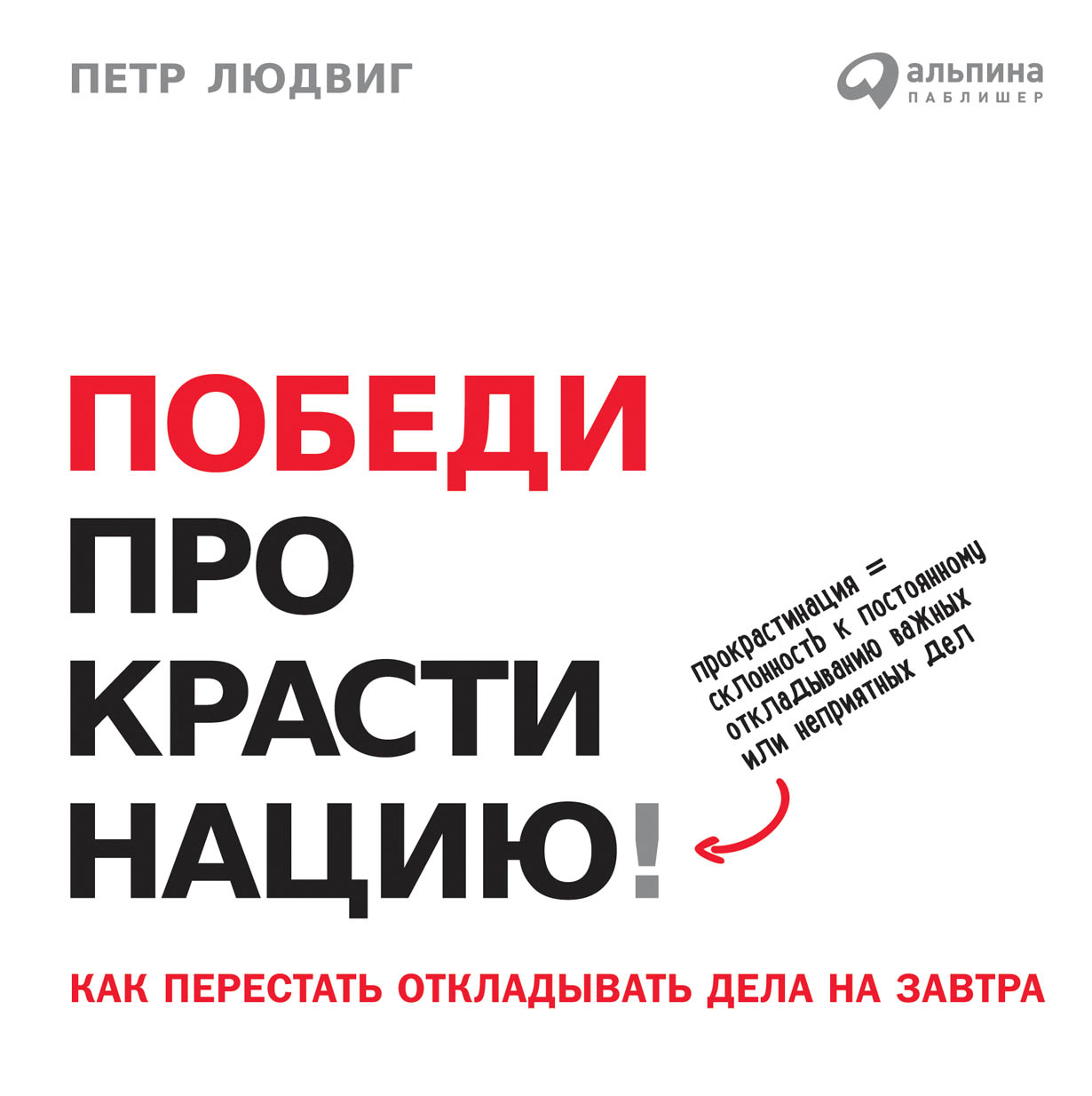
Reading time: 4 days (one chapter per day with reflection) Rating: 9/10
Review:
An excellent book with simple and practical tools for shaping your personal vision, boosting motivation, and building self-discipline. So simple, in fact, that I realized I had already been using some of them in a slightly different form long before reading the book. So I can vouch for their effectiveness. The author illustrates the book with visuals summarizing the key points. You can quickly skim the illustrations and already grasp the main ideas. However, I recommend reading it slowly, no more than one chapter per day. And before you begin, make a commitment to yourself that you can set aside time for a meeting with yourself and reflection on your motivation and personal vision.
Why is it useful?
- Offers an alternative to goal-based motivation — motivation through satisfaction with the journey
- Helps shape a personal vision focused on satisfaction with the process
- Provides simple tools for building skills, self-discipline, and overcoming decision paralysis
- Helps break out of learned helplessness and depression
- Reminds us of the importance of objectivity in evaluating our mental models, critical thinking, and the Dunning-Kruger effect
Key Ideas
The book is well structured into 4 parts:
- motivation
- self-discipline
- results
- objectivity.
Motivation
The idea of journey-based motivation as an alternative to goal-based motivation is compelling and inspiring. The insight is that satisfaction doesn't come from achieving success — rather, success comes from a state of satisfaction. Instead of goals, the author proposes "milestones" — not mandatory but desirable markers that help us understand we're moving in the right direction. However, the author doesn't elaborate on how to work with these milestones, how to define them, or how to develop an action plan. Perhaps that's the whole point of a life without rigid goals: do what you enjoy, stay satisfied, and you'll get somewhere.
The main motivational tool is a personal vision oriented toward actions and process, not toward a specific outcome. I would supplement this with my own personal tool — a monthly quality-of-life check-in based on personal metrics. This is helpful for objectively monitoring your state and regularly reviewing and adjusting your personal vision accordingly.
The book doesn't address another important point: how to reconcile your personal vision with tasks that don't fit into it at all, but which you don't have the luxury of ignoring. Such tasks exist. They're hard to get rid of. Unfortunately, they can consume a significant portion of your time and energy. You often have to choose between these tasks and your vision, because your cognitive and physical resources are limited and don't stretch to cover everything at once. The book doesn't examine this problem at all.
Self-Discipline
The author focuses on two problems — building skills and decision paralysis.
Self-discipline is illustrated through the metaphor of an elephant and its rider, where the unwieldy elephant represents our emotional side and the rider represents the rational. The ability to control the elephant is self-discipline. The rider, in steering the elephant, expends energy — or "cognitive resources." This resource needs to be regularly replenished through proper nutrition, quality rest, or light physical exercise.
Skill building means introducing new habits and rituals into your life. Major milestones aren't achieved all at once; instead, you set minimum thresholds and make reaching them a daily ritual. Step by step, you move closer to your goal, and this brings satisfaction. The key to success is consistency, not intensity or high bars. The tool for building skills is a "drill list." Essentially, it's a table where you map out a month ahead with days, several habits, and a daily minimum for each that doesn't trigger aversion. Then, every day you track your completion of these habits in the table.
The decision paralysis problem is a situation where you face a difficult choice among many options. The choice causes emotional aversion and you lose the ability to make a decision. The problem lies in the large number of available options. The way to fight this is similar to skill building — methodically, little by little, day by day, reducing the number of available choices. Prioritize and take no more than 6 of the most important tasks daily, limit the flow of new ones, delegate. Gradually, the complex problem or difficult choice will simplify, the space of options will shrink, and a decision will emerge.
The author proposes 2 practical tools. I had intuitively been using both before reading the book — they work for me. The first is a "do everything" list (I call it a backlog). In it, we collect all our tasks. Large tasks are broken down into smaller ones and also go into the backlog. The second is a "do today" list. This is a limited selection from the backlog of tasks you'll be comfortable completing in a day. It must be prepared in advance — the evening before — so that in the morning you don't spend cognitive resources choosing tasks or keeping them in your head. The fewer decisions we make during the day, the more energy we have for executing our tasks. A simple list works for me, but the author's approach is more like a map. He randomly places circles with tasks on a sheet, then connects them with arrows, as if plotting a route on a map among them. I don't bother with that. The important thing is to always keep this list in front of you: visualization prevents decision paralysis.
Results
By engaging every day in meaningful activity aligned with our vision — activity in which we already have certain skills — we achieve a state of flow. Thanks to this state, we more often receive the desired payoff, both emotional and material. Satisfaction doesn't come from success — success follows from a state of satisfaction.
Sometimes something knocks us off track and we sink into a state of dissatisfaction. Dissatisfaction is socially contagious: it spreads to those around us and eventually comes back, forming a vicious circle of hopelessness. Spinning like a hamster on a wheel in this circle, you can fall into a state of learned helplessness, which leads to depression. Learned helplessness is when, after several attempts that yield no results, we accept a new "reality" in which it's impossible. And even after conditions change, we take no new action because we consider any attempt hopeless.
You can escape this state by practicing conscious redirection of attention from negative past experiences to the positive in the present, and by focusing on the future. We are free to determine what influence external stimuli have on us and with what emotional coloring. The practical tool called the "inner game" is the ability to consciously transform negative impulses into neutral or even positive ones. A future orientation combined with a positive attitude toward the past forms a positive feedback loop — flow.
Another tool, the "flow list," is essentially a daily journal ritual where you record at least 3 positive moments from your day. My wife bought us a huge poster calendar with rows for months and columns for days. In its large cells, we write down several positive moments each day and color each cell green if the day was good, or leave it uncolored if something went wrong. This helps visualize your life and not forget about the volume of positivity that accumulates day by day.
Objectivity
The brain makes decisions based on mental models — our understanding of how the world works. However, these models don't always match reality. That's why it's important to regularly check them for objectivity. This chapter discusses the Dunning-Kruger effect. I believe every self-respecting person should be aware of it without Petr's book. The essence of the effect is that incompetent people tend to be confident in their competence, their correctness, and to overestimate their abilities. They're unable to recognize the opposite. And competent people, conversely, tend to doubt their competence. In both cases, this leads to flawed decisions.
Combating the Dunning-Kruger effect involves education based on quality sources and facts, developing critical thinking, questioning intuition, and rejecting dogma.